
The Paris Catacombs are one of the most unique and unforgettable experiences in Paris — an underground labyrinth of tunnels lined with the bones of more than six million Parisians. But with limited daily capacity, tickets that sell out days in advance, and prices that have climbed sharply in recent years, visiting takes a bit of planning.
This guide covers everything you need: current ticket prices, the best tours (including ones with access to secret restricted areas), what to expect inside, how to get there, and the insider tips we’ve picked up from years of living near Paris.

💡Paris Catacombs — Quick Facts
Address: 1 Avenue du Colonel Henri Rol-Tanguy, 75014 Paris
Metro: Denfert-Rochereau (Lines 4, 6 + RER B)
Hours: Tuesday–Sunday, 9:45 AM – 8:30 PM (last entry around 7:30 PM). Closed Mondays.
Ticket Price: €31 adults / €25 students (18–26) / €12 children (5–17)
Visit Duration: 45–60 minutes
Depth: 20 meters (65 feet) underground
Temperature: 14°C / 57°F year-round
Accessibility: No elevator. 131 steps down, 112 steps up. Not wheelchair accessible.
What Are the Paris Catacombs?
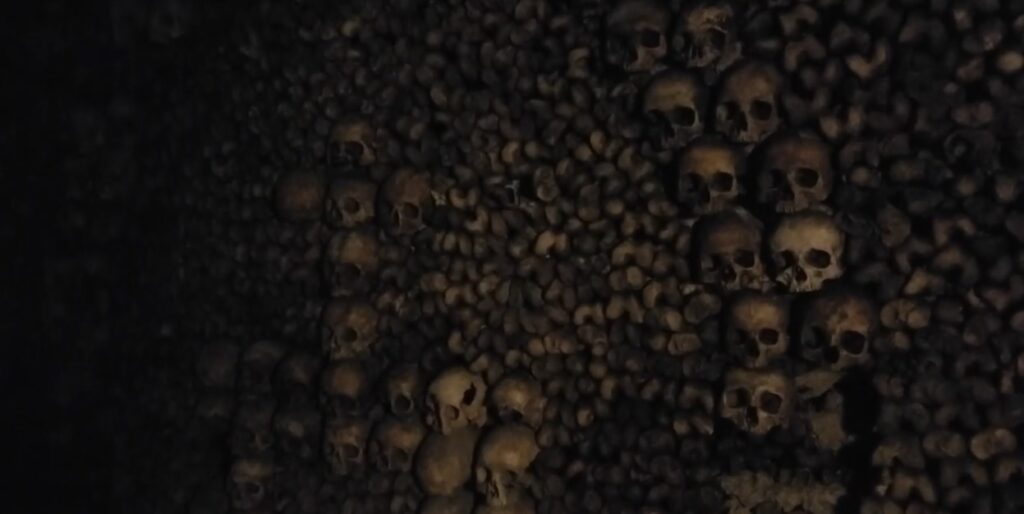
The Paris Catacombs are a vast network of underground tunnels beneath the city’s Left Bank, originally carved out as limestone quarries centuries ago. In the late 18th century, Paris faced a public health crisis — its cemeteries, especially the massive Saints-Innocents cemetery near Les Halles, were dangerously overflowing. Beginning in 1786, the city transferred millions of human remains into the abandoned quarry tunnels, creating what is now officially known as the Municipal Ossuary of Paris.
Over decades, workers arranged the bones into the carefully stacked walls you see today — rows of skulls and femurs creating patterns that are both haunting and oddly beautiful. The tunnels stretch for over 300 kilometers in total, though only about 1.5 kilometers are open to visitors.
Today, the Catacombs are one of Paris’s most popular attractions and one of the hardest to get into, with daily visitor capacity strictly limited. If it’s on your list, book ahead — this is not a place you can just walk up to.
Paris Catacombs Tickets & Prices (2026)
Paris Catacombs tickets cost €31 for adults in 2026, which includes timed entry and an audio guide in multiple languages. Student tickets (ages 18–26 with valid ID) are €25, and children ages 5–17 pay €12.
There are three ways to visit: buying official tickets directly, booking a standard guided tour, or upgrading to a VIP tour with restricted-area access. Here’s how they compare:
Official Self-Guided Ticket
Price: €40 per adult
Includes: Timed entry + audio guide
Group size: General admission (no guide)
Restricted areas: No
Best for: Budget-conscious visitors or those who prefer exploring on their own
Where to book: Tickets are sold exclusively on the official Paris Catacombs website, a maximum of 7 days in advance. They regularly sell out, especially in summer.
→ Buy Timed-Entry Tickets for the Catacombs
Skip-the-Line Guided Tour
Price: ~€199 per person
Includes: Expert English-speaking guide + skip-the-line entry
Group size: Usually up to 14 people
Restricted areas: Sometimes (depends on the operator)
Best for: First-time visitors who want historical context and commentary
→ Book a Guided Catacombs Tour
🇫🇷 Les Frenchies Tip: All official tickets are timed-entry – there is no “skip the line” option. This site is very popular and booking in advance between April-October is strongly recommended. With a guide you have reserved access to a tour-group entry line. The real advantage of booking a guided tour isn’t just the access — it’s the expert commentary that provides the stories and background as well as access to restricted rooms that other visitors can’t enter. That’s what makes the guided tours worth the price difference.
💡 Sold out on the official site? Don’t panic. Because official tickets only go on sale 7 days in advance, they sell out fast in peak season. Third-party tour operators secure their own ticket allocations, so a guided tour is often your best backup plan when the official site shows nothing available.
Best Paris Catacombs Tours Compared
If you’ve decided to go with a guided tour (and we think you should, especially for a first visit), here’s how the main options stack up.
1. Self-Guided with Audio Guide (Official Ticket) – OUR TOP PICK
The most affordable option. You’ll descend on your own and follow the one-way route through the tunnels at your own pace, listening to the included audio guide. The route is straightforward — there’s no risk of getting lost, despite what some marketing implies. The path is gated so you can only go one direction.
That said, you’ll miss the context and stories that make the experience truly memorable, and you won’t have access to any restricted areas.
- Duration: 45–60 minutes
- Price: €40
2. Premium Small Group Guided Tour
A solid option if you want expert commentary without the premium price. You’ll follow the same public route as self-guided visitors, but your guide will explain the history, point out details you’d otherwise miss, and answer questions along the way.
- Duration: ~1.5 hours
- Price: From ~€199
- Group size: Up to 14
What to Expect Inside the Paris Catacombs
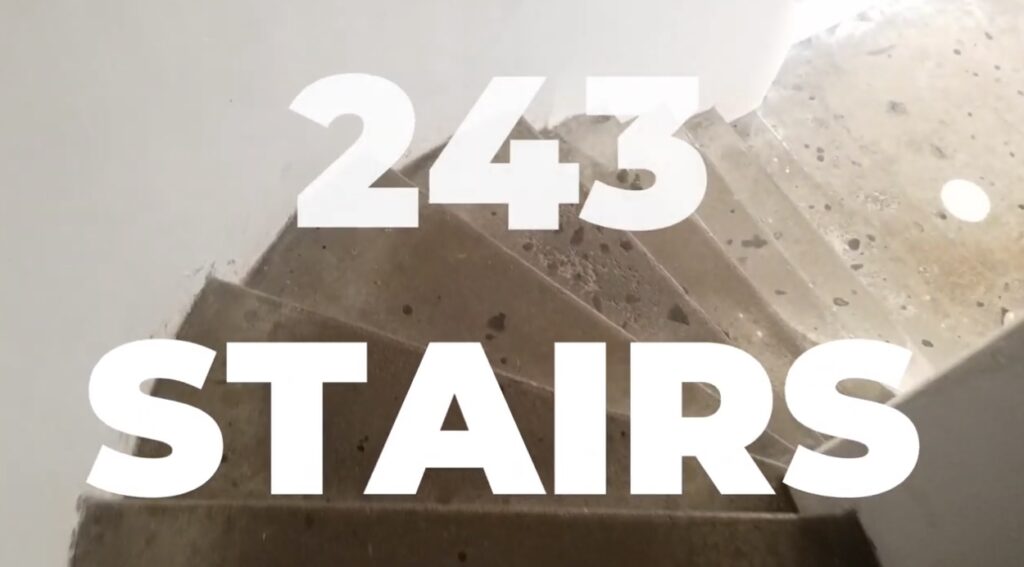
Your visit begins at street level on Place Denfert-Rochereau. From there, you’ll descend a narrow spiral staircase — 243 steps — to reach the tunnels, roughly 20 meters below the surface. The temperature drops noticeably as you go down. At the bottom, it’s a constant 14°C (57°F), regardless of what the weather is doing above ground.
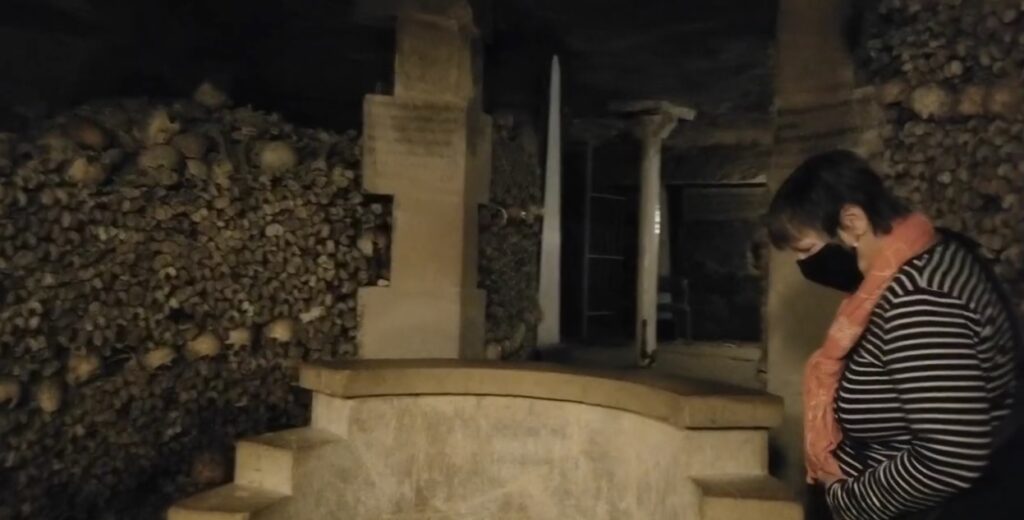
The walking route is about 1.5 kilometers long, entirely one-way. You’ll pass through dimly lit corridors before reaching the ossuary itself, where the walls are lined with carefully arranged bones and skulls. Some sections feature decorative patterns, inscriptions, tombstones, and symbolic altars. The atmosphere is quiet, reflective, and unlike anything else in Paris.
A few things to know before you go in:
It’s eerie, not terrifying. Most visitors describe the experience as fascinating and humbling rather than scary. The bones are arranged respectfully — it feels more like an open-air museum than a horror movie set.
Photography is allowed. You can take photos and videos for personal use. Flash photography and tripods are not permitted.
There are no restrooms inside. The only facilities are at the exit. Plan accordingly.
You’ll exit on a different street. The exit is on Rue Rémy Dumoncel, about a 10-minute walk from the entrance. Keep this in mind if someone is waiting for you outside — they should meet you at the exit, not the entrance.
The gift shop is at the exit. It’s actually quite good for Paris-themed souvenirs if you’re into that.
Tips for Visiting the Paris Catacombs
After visiting ourselves and helping thousands of travelers plan their trips, here are the practical tips that actually matter:
Book early. Official tickets are released only 7 days in advance and sell out fast, especially from May through October. Set a reminder on your phone. If the official site is sold out, book a guided tour through a third-party operator — they have separate allocations.
Wear sturdy shoes. The ground is uneven, often damp, and can be slippery in places. Heels and sandals are a bad idea. Comfortable walking shoes with decent grip are a must.
Bring a light jacket or sweater. It’s 14°C / 57°F underground no matter what season it is. Even if it’s 35°C up top in August, you’ll want an extra layer down below.
The best time to visit is the first morning slot or after 4 PM. Midday is the busiest. If you can grab a 10 AM or late afternoon time slot, you’ll have a calmer experience and fewer people in your photos.
Allow buffer time. Even with timed tickets, there’s a security check and a short queue to get in. Arrive 15–20 minutes before your time slot.
Not suitable for everyone. The Catacombs are not recommended for children under 5, anyone with claustrophobia, or visitors with limited mobility. There’s no elevator — it’s 131 steps down and 112 back up, through narrow passages with low ceilings in places.
Don’t stack it with another major attraction on the same day. The visit itself is only 45–60 minutes, but between travel time, queuing, and the walk, it takes a chunk out of your day. Pair it with something nearby and low-key rather than rushing to the Louvre afterward.
How to Get to the Paris Catacombs
The Paris Catacombs entrance is at Place Denfert-Rochereau in the 14th arrondissement, directly across from the Denfert-Rochereau metro station.
By Metro: Take Line 4 or Line 6 to Denfert-Rochereau. You can also take RER B to the same station. When you exit, the entrance is the small green pavilion across the square — you’ll likely see the queue. For more details on navigating the Paris metro system, check out our Paris Metro Guide.
By Bus: Lines 38 and 68 stop at Denfert-Rochereau.
On foot: If you’re coming from the Luxembourg Gardens or Montparnasse area, it’s a pleasant 15–20 minute walk.
Remember: the exit is on a different street. You’ll come out on Rue Rémy Dumoncel, about 700 meters from the entrance. The nearest metro from the exit is Mouton-Duvernet (Line 4) or you can walk back to Denfert-Rochereau in about 10 minutes.
💡 While you’re in the neighborhood: The free Musée de la Libération de Paris – Musée du Général Leclerc – Musée Jean Moulin is directly across the square from the Catacombs entrance. It covers the Occupation and Liberation of Paris during WWII and includes access to an underground bunker used by the French Resistance. Free entry, no reservation needed, and genuinely excellent. A perfect pairing if you have time to spare before or after your Catacombs visit.
A Brief History of the Paris Catacombs
Understanding the history makes the visit significantly more powerful. Here’s the short version:
Paris was built on limestone. For centuries, quarries beneath the city supplied the stone used to construct many of its most famous buildings, including Notre-Dame Cathedral. By the 18th century, the quarries were largely exhausted — but the tunnels remained.
Meanwhile, above ground, the city’s cemeteries had become a genuine public health crisis. The largest, the Saints-Innocents cemetery near Les Halles, had been in use for nearly ten centuries. Mass graves were stacked so high that walls sometimes collapsed, spilling remains into neighboring basements. The stench was unbearable. Disease was spreading.
In 1786, the city made the decision to transfer the contents of Saints-Innocents — and eventually many other Parisian cemeteries — into the old quarry tunnels. The transfers happened over decades, often conducted at night in solemn, priest-led processions. Workers arranged the bones into the decorative walls you see today, creating a place that is part cemetery, part monument, and part art installation.
The Catacombs were first opened to the public in 1809 and have been a source of fascination ever since. Napoleon reportedly visited. Victor Hugo set scenes from Les Misérables in the tunnels. During WWII, both the French Resistance and German soldiers used separate sections of the underground network.
Today, the public can visit about 1.5 km of the roughly 300 km of tunnels that exist beneath Paris. The rest is off-limits — though an underground subculture of urban explorers (called “cataphiles”) has been sneaking into the forbidden sections for decades.
Paris Catacombs FAQ
❓ Frequently Asked Questions
How much do Paris Catacombs tickets cost in 2026?
Paris Catacombs tickets are €31 for adults, €25 for students aged 18–26 (with valid student ID), and €12 for children aged 5–17. Tickets include timed entry and an audio guide. Children under 5 are not admitted.
Can you visit the Paris Catacombs without a reservation?
No. All visitors must have a pre-booked timed-entry ticket. Tickets are sold on the official Catacombs website a maximum of 7 days in advance. Walk-up entry is not possible.
Is the Paris Museum Pass accepted at the Catacombs?
No. The Paris Catacombs do not accept the Paris Museum Pass or any other city pass. You must purchase a separate ticket.
How long does a visit to the Paris Catacombs take?
The self-guided visit takes about 45–60 minutes. Guided tours typically last 1.5 to 2 hours, depending on the tour. Factor in an additional 15–20 minutes for security and queuing at the entrance.
Are the Paris Catacombs scary?
Most visitors find the Catacombs fascinating rather than frightening. The bones are arranged artistically and the atmosphere is quiet and respectful. That said, if you have claustrophobia or are uneasy around human remains, it may not be for you.
Is there an elevator at the Paris Catacombs?
No. You must walk down 131 steps to enter and climb 112 steps to exit. There is no elevator or alternative accessible route. The visit is not suitable for wheelchair users or visitors with significant mobility limitations.
Can you take photos in the Paris Catacombs?
Yes. Personal photography and video are allowed throughout the visit. Flash photography and tripods are not permitted.
What should I wear to the Paris Catacombs?
Wear comfortable, closed-toe shoes with good grip — the ground is uneven and can be damp. Bring a light jacket or sweater as the temperature underground is a constant 14°C (57°F) regardless of the season.
What is the best time to visit the Paris Catacombs?
The first morning time slot (around 10 AM) and late afternoon (after 4 PM) are the quietest. Midday slots, weekends, and summer months are the busiest. Booking early in the week (Tuesday–Thursday) also helps.
Is a guided tour of the Paris Catacombs worth it?
Yes, especially tours that include access to restricted areas closed to the general public. A guide brings the history to life in a way the audio guide simply can’t match, and the restricted rooms — hidden chapels, the Barrel of Passion — are genuinely worth the extra cost.
How do I get to the Paris Catacombs?
The entrance is at Place Denfert-Rochereau in the 14th arrondissement. Take Metro Line 4 or 6, or RER B, to Denfert-Rochereau station. The entrance is the small green building directly across the square from the metro exit.
Watch Our Catacombs Experience
We filmed our full experience visiting the Paris Catacombs — watch it below to see exactly what the visit looks like, from the spiral staircase descent to the bone-lined tunnels.
Plan the Rest of Your Trip
If you’re planning your Paris itinerary, these guides might help: