
Planning a visit to the Louvre? The Louvre is extraordinary — but it’s also enormous, crowded, and easy to find overwhelming. This Louvre museum guide covers everything you need: how to buy tickets, which entrance to use, how the museum is laid out, what to see, and how to make the most of your time.
⚡ Quick Facts — Louvre Museum
Louvre tickets cost €32 for non-EU adults (free for under-18s and EU residents under 26)
Book timed tickets in advance — walk-up queues regularly exceed 90 minutes in peak season
For a first visit, we recommend a guided tour — the museum is large and difficult to navigate effectively for first time visitors
Open 9am–6pm daily closed Tuesday | Late night Wed & Fri until 9:45pm
A Brief history of the Louvre Museum
The Louvre has seen many roles before it became a museum. It started as a 12th-century medieval fortress built to protect Paris from English and Flemish threats. Over the following centuries, successive French kings transformed it into a royal palace and it remained the residence of the court for nearly 400 years, until Louis XIV moved his court to Versailles in 1682.
The idea of using the abandoned palace as a public museum took hold in the 1700s, and on August 10, 1793, during the French Revolution, the Louvre opened to the public for the first time. Today it receives over 8 million visitors per year, making it the most visited museum in the world.
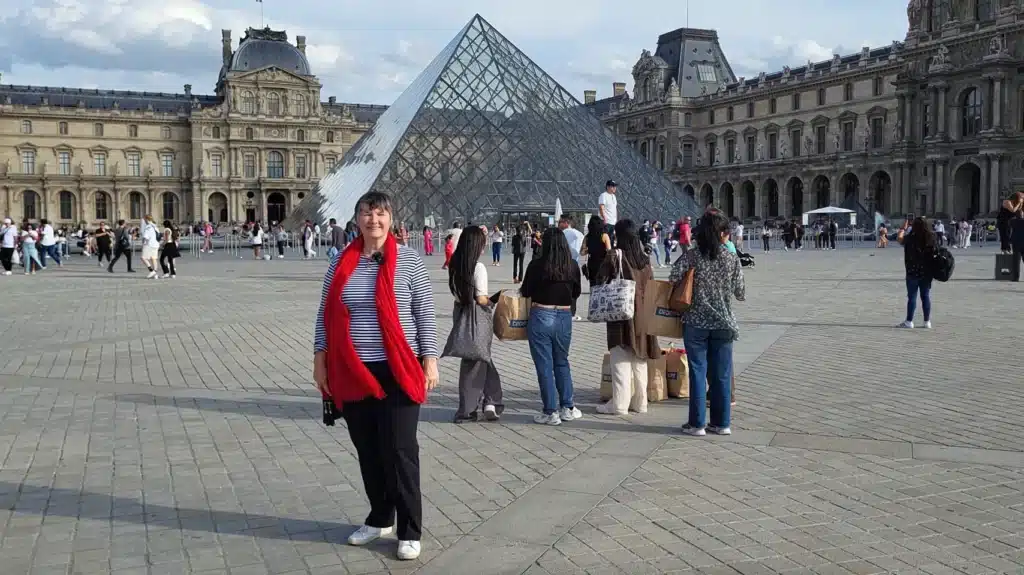
The iconic glass Pyramid in the central courtyard was designed by Chinese-American architect I.M. Pei and opened in 1989 — controversial at first, now universally loved.
How The Louvre Museum is organized
The Louvre is shaped like a large U around a central courtyard (the Cour Carrée). It’s divided into three main wings, each with four floors. Knowing what’s where before you arrive saves time and frustration.
The museum’s three wings – Sully, Denon, and Richelieu – host extensive collections. Trust us, you won’t be able to see everything in a single visit, so the table below can help identify what is most important to you.
|
Wing |
What’s Here |
Don’t Miss |
|
Denon |
Italian paintings, French paintings, large-format sculpture, Egyptian & Greek antiquities |
Mona Lisa, Winged Victory, Psyche & Cupid, Liberty Leading the People |
|
Sully |
Medieval Louvre walls, Egyptian antiquities, Greek & Roman sculpture, French royal apartments |
Venus de Milo, Great Sphinx of Tanis, Egyptian mummies |
|
Richelieu |
Northern European paintings (Flemish, Dutch, German), French sculpture, Napoleon III apartments, Islamic art |
Vermeer works, Napoleon III apartments, Crown Jewels |
🇫🇷 Les Frenchies Tip
You cannot see all three wings in one visit — and we do not recommend you try. Pick one or two areas that interest you and do them at a pace that is enjoyable. The Denon wing alone contains enough to see over a full half-day. See our 3-hour masterpieces itinerary for a curated route across the highlights.
Famous artworks to see
Here are the works that consistently draw the most visitors — and we think are genuinely worth your time.
Mona Lisa — Denon Wing, Room 711
Leonardo da Vinci painted this portrait between 1503 and 1506. Yes, she’s smaller than you expect. Yes, the room is crowded. Go early (before 10am) or late on a Wednesday/Friday evening for a better experience. The painting’s power is real — if crowds allow give yourself more than a passing glance.
Winged Victory of Samothrace — Denon Wing, Daru staircase
This 2nd-century BC Greek sculpture of Nike, goddess of victory, stands at the top of the grand staircase in one of the most dramatic installations in any museum anywhere. The stunning effect leads even the most tired visitor to stop here.
Venus de Milo — Sully Wing, Room 345
A 2,000-year-old marble statue of Aphrodite, missing her arms since discovery. Still one of the most beautiful objects in the building and the room is less crowded than the Mona Lisa area.
Liberty Leading the People (Delacroix) — Denon Wing, Room 700
Painted in 1830, this enormous canvas depicts Liberty — personified as Marianne, the symbol of France — leading revolutionaries over barricades. A central piece of French cultural identity.
Psyche Revived by Cupid’s Kiss (Canova) — Denon Wing, Room 403
An 18th-century Italian marble sculpture of breathtaking delicacy. The contrast between the coldness of the stone and the tenderness of the gesture makes this Antoine’s personal favourite in the entire collection.
Louvre tickets — everything you need to know
Standard ticket
Adult entry costs €32 (non-EU resident). This covers the entire permanent collection across all three wings. Temporary exhibitions require a separate ticket. Book online to receive a timed entry — this is essential in peak season.
- Adults: €32
- Under-18: Free (bring ID for children)
- EU residents under 26: Free (bring ID)
- Guided tours: usually €55–€130 per person, ticket included
Free entry days
- First Friday of each month, from 6pm — free for everyone (except July and August)
- Bastille Day, July 14 — free for everyone
- All visitors under 18 — free every day
- EU residents under 26 — free every day
Paris Museum Pass
The Paris Museum Pass covers entry to the Louvre and over 50 other museums and monuments. Available for 2, 4, or 6 consecutive days. It’s worth buying if you’re visiting multiple major sites each day.
Practical information
Opening hours
- Monday, Wednesday, Thursday, Friday: 9am–6pm
- Wednesday and Friday: open late until 9:45pm
- Saturday and Sunday: 9am–6pm
- Tuesday: closed
- Check for special closures around public holidays at louvre.fr
Getting there
- Métro: Palais Royal–Musée du Louvre (lines 1 and 7) — exit directly into the Carrousel du Louvre
- Bus: Lines 21, 27, 39, 48, 68, 69, 72, 81, 95
- By foot from the Eiffel Tower: approximately 30–35 minutes
- By foot from Notre-Dame: approximately 20 minutes
Entrances
- Pyramid (main entrance): iconic but often the most crowded
- Carrousel du Louvre (Rue de Rivoli underground entrance): usually fastest, accessible from the Métro
- Porte des Lions (near the Seine): quieter, works with pre-booked tickets
Facilities
- Toilets: available on all levels
- Cloakrooms: free, available near each entrance — leave coats and large bags
- Cafés and restaurants: on multiple floors, including the Café Richelieu and Café Mollien
- Gift shop: in the Carrousel du Louvre
- Wheelchairs: free to borrow, reserve in advance
- Photography: allowed everywhere without flash
🇫🇷 Our Recommended Louvre Tours
Small group highlights tour (2–2.5 hrs, from €55) — best for first-timers
Private Louvre tour (2–3 hrs, from €120) — best for art enthusiasts and special occasions
Wheelchair-accessible tour — fully adapted, private, same art and stories
Practical tips for your visit
- Book tickets online. Walk-up queues are long. Timed entry also helps you arrive and go straight in.
- Visit on a weekday. Saturdays and Sundays are the most crowded days. Wednesday and Friday evenings are the least crowded times in the building.
- Use the Carrousel du Louvre entrance. It’s quicker, underground (useful in rain), and connects directly to the Métro.
- Download the Louvre app before you go. The floor maps are excellent and save significant time inside.
- Use the cloakroom. Walking 15 acres in a heavy coat with a backpack is exhausting. Store what you don’t need.
- Set a 2–3 hour limit and stick to it. Museum fatigue is real. Better to see 20 works deeply than 200 superficially.
- Wear comfortable shoes. The floors are marble. You will walk further than you expect.
Online resources
The official Louvre website (louvre.fr) is the most reliable source for current ticket prices, temporary exhibition listings, and any unexpected closures. The Louvre’s YouTube channel also features virtual tours and curator interviews if you want to prepare before you visit.
🎟️ Ready to book? Secure your timed entry tickets.
👉 Check Availability on Tiquets →
✓ Instant confirmation ✓ Mobile vouchers accepted